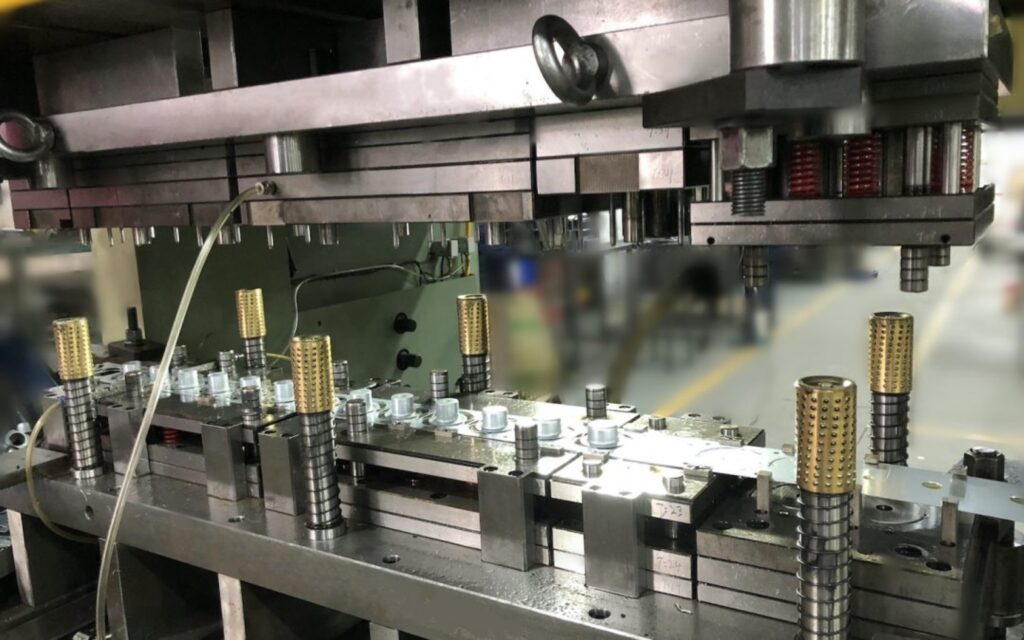

Metal stamping continues to play a vital role in modern manufacturing. Industries that rely on precision metal components depend on stamping processes that are consistent, repeatable, and efficient. However, growing production demands and tighter quality expectations have encouraged manufacturers to rethink traditional stamping workflows.
Automation is now reshaping the way metal stamping services operate across Canada. Instead of relying solely on manual processes, manufacturers are integrating automated technologies that improve accuracy, consistency, and operational visibility.
Understanding these automation enhancements helps businesses evaluate how modern custom metal stamping operations support reliable component production.
1. Robotic Material Handling & Coil Feeding Systems
Material handling has historically been one of the most labour-intensive aspects of stamping operations. Manual feeding of coils or sheets often slows production and increases the potential for inconsistencies.
Robotic material handling and automated coil-feeding systems help address this challenge by:
- Delivering consistent material positioning
- Reducing manual intervention during high-volume runs
- Supporting continuous press operation
- Minimizing handling errors that can affect part accuracy
Automated coil feeding ensures that stamping presses receive a stable and uniform supply of material. This consistency helps maintain dimensional accuracy throughout long production cycles.
For manufacturers producing repeatable components, automated feeding systems contribute to smoother stamping workflows.
2. Servo-Driven Press Technology
Traditional mechanical presses typically operate at fixed speeds. While effective for many applications, fixed-speed presses can limit flexibility when working with different materials or part geometries.
Servo-driven press systems introduce greater control over the stamping process. These presses allow programmable motion profiles that improve forming accuracy.
Key advantages include:
- Adjustable stroke speeds
- Improved control during forming stages
- Reduced material stress during stamping
- Better consistency across production runs
Servo technology also enables metal stamping service providers to fine-tune press motion to meet different part requirements. This level of control helps maintain part integrity and reduces variability.
3. In-Line Vision Inspection Systems
Quality verification traditionally occurs after a batch of parts has been produced. While this approach identifies defects, it may also lead to wasted material if issues are discovered late in production.
In-line vision inspection systems provide continuous monitoring during stamping operations.
Vision inspection systems typically:
- Capture high-resolution images of stamped parts
- Compare dimensions against programmed specifications
- Detect surface defects or shape irregularities
- Trigger alerts if deviations occur
Because inspection happens during production, operators can quickly address tooling or material issues before larger quantities of parts are affected.
For manufacturers producing components used in regulated industries such as medical equipment, this real-time inspection capability supports higher quality standards.
4. Real-Time Process Monitoring & IoT Sensors
Another major advancement in stamping automation is the integration of sensors and process monitoring technologies.
Sensors placed within stamping systems collect operational data such as:
- Press force
- Tool wear patterns
- Production speed
- Equipment vibration
This data feeds monitoring platforms that provide real-time insights into machine performance.
Benefits include:
- Early detection of tooling issues
- Reduced unplanned downtime
- Improved maintenance planning
- Better production tracking
Real-time monitoring allows production teams to identify small issues before they develop into costly disruptions.
5. Automated Die Change & Quick-Change Tooling Systems
The die setup can significantly influence stamping productivity. Traditional die changeovers often require extended machine downtime.
Automated die change and quick-change tooling systems reduce this downtime by simplifying setup procedures.
Key improvements include:
- Faster die installation and removal
- Reduced manual adjustments
- Improved repeatability between production runs
- Increased equipment utilization
By minimizing changeover time, stamping operations transition between production runs with fewer interruptions.
How Automation Enhances Metal Stamping Services Beyond Speed
Automation in custom metal stamping operations is often associated with faster production. However, the benefits extend far beyond speed.
Modern automated workflows support:
- Improved dimensional consistency across large production runs
- Better quality monitoring during part formation
- Greater process transparency through real-time data
- Reduced operational disruptions caused by equipment wear
These advantages contribute to more reliable component production. Manufacturers that depend on precision metal components often benefit from stamping partners that integrate automation within their processes.
When Should Manufacturers Consider Automated Stamping?
Automation becomes particularly valuable when production demands increase or when consistent part accuracy is essential.
Common scenarios for a custom metal stamp in Canada include:
- High-volume production runs
- Tight dimensional tolerances
- Components used in regulated sectors
- Manufacturing environments requiring repeatable outputs
In these situations, automated stamping workflows can improve both productivity and process stability.
Building a Smarter Metal Stamping Workflow
Automation continues to reshape how stamping operations function. Technologies such as robotic material handling, servo-driven presses, vision inspection, and real-time monitoring are transforming the sector.
As production requirements evolve, many organizations are evaluating automated stamping workflows to support reliable, scalable manufacturing.
Businesses seeking precision component production can contact Promark Tool and Manufacturing to learn more about modern sheet metal stamping.