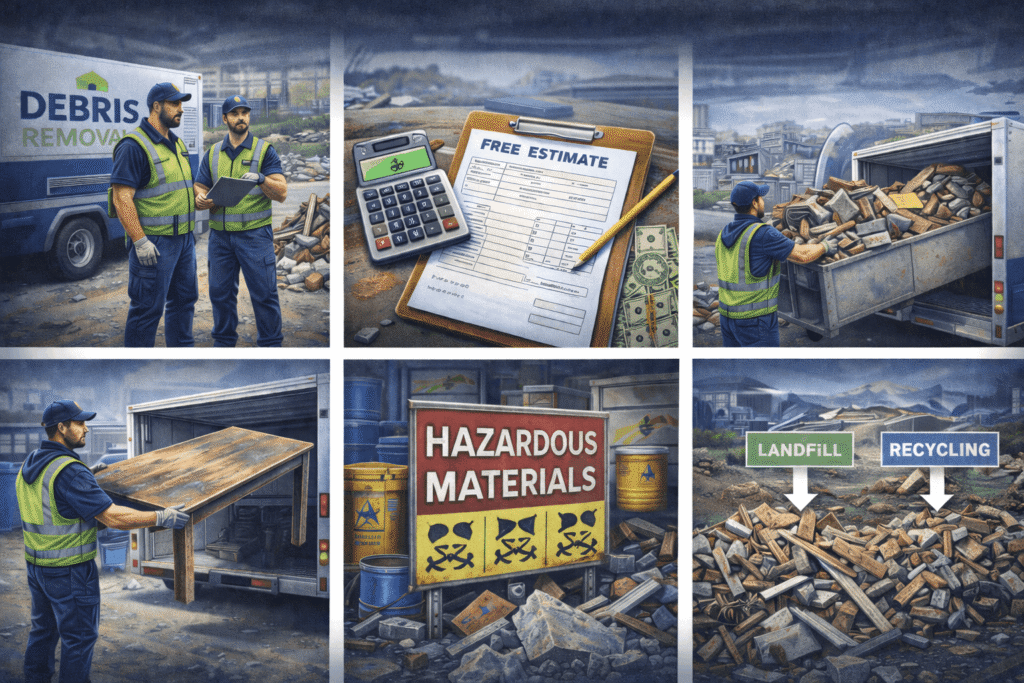

If you’re tackling a renovation or small-scale building project, chances are you’ll have a growing pile of debris to deal with. Cleanup can sneak up quickly—drywall scraps, wood pieces, tiles, and packaging can clutter your worksite before you know it. That’s when it’s time to book construction waste removal with a team that knows how to handle light debris quickly and safely.
Before you book your pickup, here are five essential things to keep in mind to ensure smoother construction debris removal.
What Construction Items Can Be Removed
At 1-800-RID-OF-IT, we handle light construction debris from small-scale and residential renovations. Items we commonly remove include:
- Drywall offcuts
- Small wood pieces (no treated lumber)
- Tile pieces
- Flooring scraps (laminate or vinyl)
- Empty cardboard or packaging from construction materials
Heavy materials are also accepted. Always confirm the type and quantity of debris beforehand.
When to Schedule Removal During a Renovation
The best time to schedule construction waste disposal is once your renovation reaches a phase where clutter begins to disrupt workflow or compromise safety. This might be:
- After demolition
- Following drywall installation
- Near the end of the flooring stage
You don’t have to wait until the project is fully finished. Booking mid-project helps keep the space workable and organized—especially for smaller residential jobs.
Why Volume Matters
When it comes to construction waste removal, volume matters more than you think. Our pricing is based on the space the debris occupies in the truck, and larger piles may require more time or a second load.
To avoid surprises:
- Estimate your pile size ahead of time
- Avoid mixing construction debris with household items
- Let the team know if large sheets or bulky items are involved
This allows us to plan accordingly and send the right crew for your job.
Prepping the Debris for Pickup
While our teams handle all the lifting and loading manually, there are a few ways to prepare your debris pile to ensure a faster and more efficient pickup:
- Place debris in a single area, preferably accessible from the entrance
- Bag smaller items or stack loose materials together if possible
- Keep it separate from household waste or furniture to avoid confusion
Our team handles the dismantling of light materials such as sheds, furniture, etc—having materials pre-sorted or bagged when possible helps avoid delays.
Avoiding Delays With Organized Access
Debris pickups are more efficient when the area is safe and accessible. If the project is ongoing, ensure that a clear path to the debris pile is left open. Avoid obstructing this path with tools, materials, or vehicles.
For jobs in basements or backyards, be sure to mention any stairs or difficult access points when booking. This information helps the crew prepare for safe, efficient entry and exit, preventing damage to surrounding areas.
Book Smart and Stay Ahead of the Mess
With the proper planning, construction waste disposal doesn’t have to be a last-minute hassle. By understanding what can be removed, when to book, and how to prepare your space, you can make the process smoother for everyone involved.
At 1-800-RID-OF-IT, we focus on efficient, hands-on construction debris removal for light debris. Whether it’s tile scraps or renovation clutter, we’re here to help you move forward with less mess and more peace of mind. For more details, contact us today!