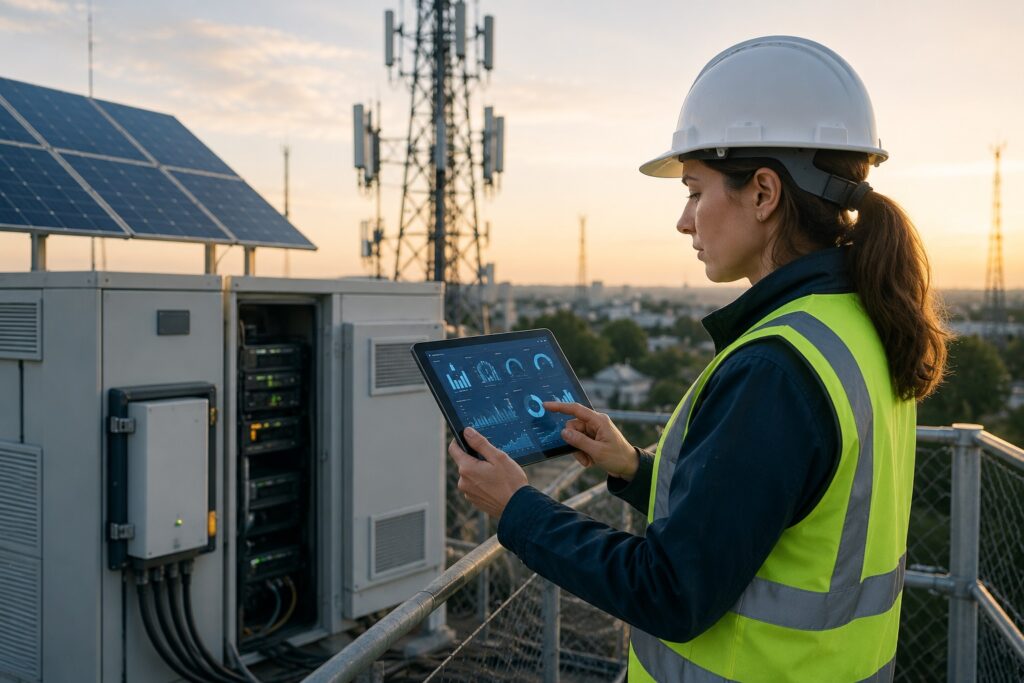

Telecom infrastructure faces growing pressure from rising energy consumption, increasing network density, and expanding remote site deployments. Fragmented monitoring systems often create operational blind spots that affect uptime, cooling performance, and long-term OPEX control.
Integrated energy management solutions help operators unify monitoring, thermal management, asset visibility, and remote control across distributed infrastructure. Instead of relying on disconnected systems, telecom providers gain centralized operational intelligence that supports reliability, efficiency, and scalable infrastructure planning.
1. Centralized Visibility Improves Telecom Site Management
Modern telecom environments generate data from HVAC systems, energy meters, controllers, generators, batteries, and environmental sensors. Managing these assets separately slows operational response and increases troubleshooting complexity.
Integrated platforms consolidate telemetry into a unified operational view. Operations teams can monitor:
- Power usage
- Thermal conditions
- Equipment health
- Environmental alarms
- Site performance trends
This centralized approach improves fault isolation and creates clearer escalation workflows across engineering and field operations teams.
2. Intelligent Controllers Reduce Cooling and Power Inefficiencies
Intelligent site controllers are essential to scalable energy management solutions. They automate environmental adjustments in real time while maintaining stable thermal conditions across distributed telecom infrastructure.
These systems help operators:
- Reduce unnecessary cooling runtime
- Maintain stable enclosure temperatures
- Optimize HVAC performance
- Improve energy efficiency
- Minimize manual intervention
Adaptive controls become especially valuable during fluctuating load conditions or peak demand periods where thermal instability can increase equipment failure risk.
3. Protocol Integration Supports Multi-Vendor Infrastructure
Telecom operators rarely manage standardized infrastructure across every site. Many environments contain mixed vendor equipment using different communication standards and monitoring architectures.
Integrated telecommunications management solutions bridge these systems through protocol mediation and gateway normalization. Advanced platforms commonly support:
- SNMP
- Modbus
- MQTT
- LTE connectivity
- Remote IoT gateway integration
This interoperability reduces the need for unnecessary asset replacement while improving monitoring consistency across the network.
4. Telecom Tower Monitoring Improves Alarm Quality
Large-scale telecom networks generate thousands of alarms daily. Without intelligent filtering and correlation, operations centers can struggle to identify the events that genuinely threaten uptime.
Advanced telecom tower monitoring platforms improve alarm discipline by:
- Grouping related alerts
- Prioritizing fault severity
- Detecting operational anomalies
- Reducing alarm flooding
- Supporting faster root cause analysis
This approach helps technical teams focus on critical conditions instead of reacting to isolated notification noise.
5. Energy Management Solutions Help Control Rising OPEX
Energy costs continue to pressure telecom operators managing distributed infrastructure portfolios. Granular monitoring helps identify inefficiencies that often remain hidden inside fragmented systems.
Integrated energy management solutions expose:
- Cooling inefficiencies
- Excess generator runtime
- Power leakage
- Battery performance issues
- Load balancing opportunities
Remote adjustment capabilities also support better energy optimization when governance policies and rollback controls are clearly established.
6. PLC Group Delivers Integrated Infrastructure Intelligence
PLC Group combines remote monitoring, HVAC controls, gateways, analytics, and actionable intelligence into a unified operational ecosystem designed for telecom and critical infrastructure environments.
Its capabilities include:
- Multi-vendor integration
- Intelligent HVAC controls
- Remote monitoring platforms
- Energy optimization analytics
- Alarm management
- IoT gateway infrastructure
- Asset visibility tools
PLC Group also supports scalable deployment models tailored to existing infrastructure rather than forcing unnecessary replacement strategies. This allows operators to modernize infrastructure while maintaining operational continuity across distributed telecom environments.
Building Smarter Telecom Infrastructure With Integrated Energy Management
Integrated energy management solutions help telecom operators improve uptime, strengthen alarm visibility, optimize cooling performance, and reduce operational inefficiencies across large infrastructure portfolios.
As networks continue to expand, centralized monitoring, intelligent controls, and actionable operational intelligence become essential for maintaining reliable telecom operations. Organizations evaluating modernization strategies should prioritize platforms that combine interoperability, scalability, and real-time infrastructure visibility into a single operational framework.
Contact PLC Group today to schedule a telecom infrastructure assessment and explore integrated energy management solutions designed for long-term operational reliability and OPEX optimization.