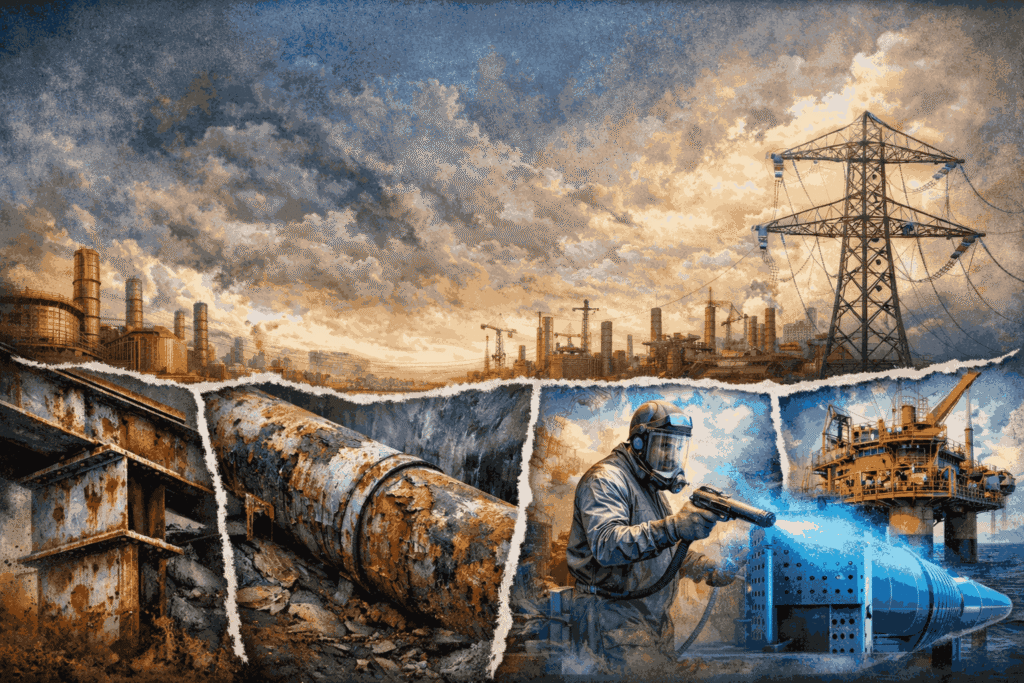

Steel structures form the backbone of industrial facilities, power generation assets, transmission infrastructure, and heavy processing environments. When protective coatings fail, the consequences extend far beyond surface defects. Corrosion, shutdowns, structural repairs, and regulatory scrutiny can follow, increasing operational risk and long-term costs.
Preventing these failures requires more than selecting a coating material. It demands controlled surface preparation, calibrated application, and compliance with recognized industry standards. That is why many industrial operators rely on engineered powder coating services to protect steel assets operating under demanding environmental and mechanical conditions.
1. Premature Corrosion from Inadequate Surface Preparation
Improperly prepared steel is one of the most common causes of coating failure. Residual mill scale, oil contamination, rust, and embedded salts interfere with adhesion and allow moisture to penetrate beneath the film.
SSPC-compliant abrasive blasting removes contaminants and creates a defined anchor profile. Without this mechanical bonding foundation, coatings fail prematurely, and corrosion spreads beneath the surface.
2. Adhesion Breakdown Under Thermal and Environmental Stress
Industrial and energy facilities experience temperature fluctuations, vibration, and exposure to chemicals. Poorly cured or improperly applied coatings can lose adhesion under these stresses.
Advanced powder systems, applied electrostatically and cured under controlled conditions, create a dense cross-linked structure. This improves resistance to expansion and contraction cycles while maintaining bond strength under environmental load.
3. Inconsistent Film Thickness Leading to Weak Protection Zones
Uneven coating thickness introduces vulnerability. Thin edges, weld seams, and corners become corrosion initiation points, while excessive thickness can lead to cracking during thermal expansion.
Controlled powder application ensures consistent film build across complex steel geometries. Uniform coverage enhances protective performance and reduces the risk of localized failure.
4. Coating Delamination on Heavy Equipment and Machinery
Heavy equipment and machinery in industrial operations are subject to constant mechanical stress, abrasion, and impact. Coatings that lack flexibility or adhesion separate from the substrate, exposing bare steel.
Durable powder coatings provide improved impact resistance and stronger mechanical adhesion when paired with proper blasting. This reduces peeling and flaking under operational stress.
5. Environmental Degradation in Energy Sector Installations
Energy sector assets such as substations, transformers, structural frames, and pipeline supports operate in harsh environments. Moisture exposure, UV radiation, airborne pollutants, and chemical contact accelerate coating breakdown.
Powder coatings form a dense, low-porosity barrier that resists moisture intrusion and environmental degradation more effectively than many traditional liquid systems. Compliance with ASTM, UL, CSA, and NEMA standards, where applicable, further supports durability.
6. Accelerated Maintenance and Recoating Cycles
When coatings degrade prematurely, maintenance intervals shorten. Surface preparation, recoating, labor allocation, and downtime significantly increase lifecycle costs.
Investing in standards-driven preparation and controlled application reduces the frequency of remedial work. Longer service intervals translate into measurable cost savings for industrial and energy facilities.
7. Compliance Failures That Lead to Project Delays
Industrial and energy projects often require adherence to defined coating specifications and inspection protocols. Non-compliant preparation or inconsistent application can result in failed inspections and project delays.
Standards-based powder coating processes align with SSPC and ASTM requirements, ensuring predictable outcomes and smoother project approvals.
Preventing Steel Coating Failure Is a Strategic Investment
Steel coating failures are rarely random events. They stem from avoidable gaps in preparation, application control, or compliance oversight. Addressing these factors at the outset prevents corrosion, delamination, and costly maintenance cycles across industrial and energy sectors.
Professional Powder Coating delivers engineered solutions backed by strict quality control, SSPC-compliant surface preparation, and controlled curing processes. By prioritizing durability and compliance, steel assets achieve long-term protection under demanding operating conditions.
Organizations seeking dependable steel coating services in Calgary can contact Professional Powder Coating to implement performance-driven strategies that reduce risk and protect critical infrastructure.