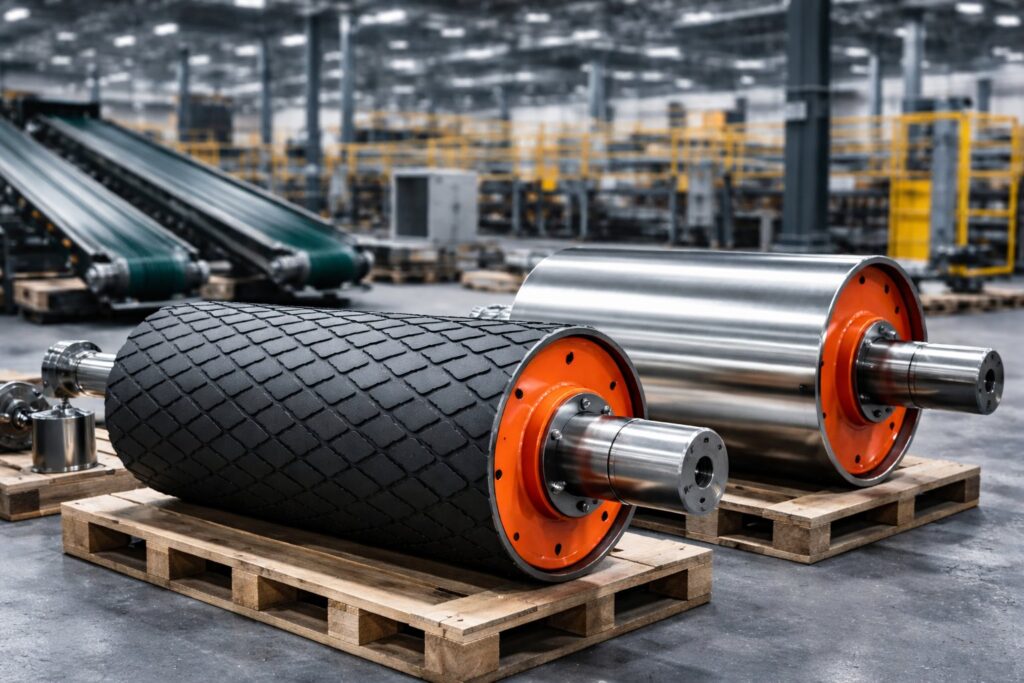

Unexpected conveyor downtime often stems from a single overlooked component. Conveyor pulleys operate under constant load, friction, and tension. When pulley specifications do not match the application, performance issues follow quickly. These issues disrupt production schedules, increase maintenance demands, and create avoidable safety risks.
For facilities across Pennsylvania and throughout the U.S., ordering industrial conveyor pulleys is not a routine purchasing task. It represents an operational decision that directly affects uptime, throughput, and long-term equipment reliability. Making the right call early prevents costly corrections later.
Common Mistakes Made When Ordering Industrial Conveyor Pulleys
Many conveyor pulley issues stem from assumptions made during ordering. Common mistakes include:
- Selecting pulleys based only on belt width
- Overlooking shaft size and load requirements
- Assuming standard lagging suits all applications
- Ignoring environmental exposure, such as moisture or dust
- Replacing pulleys without reviewing the full conveyor configuration
These missteps often result in premature wear, belt tracking problems, or unexpected bearing failure. Addressing these factors upfront leads to more stable conveyor operation
Key Factors to Confirm Before Placing a Conveyor Pulley Order
Accurate industrial conveyor pulley selection depends on confirming several technical details. Each factor contributes to system performance and service life.
Key items to verify include:
- Pulley diameter and face width
- Shaft diameter and mounting method
- Load capacity and belt tension
- Bearing type and housing configuration
- Lagging material and thickness
Confirming these details ensures the pulley integrates properly with existing conveyor components, preventing alignment or stress issues.
Operating Environment Considerations That Influence Pulley Specs
The operating environment significantly influences the design of conveyor head pulleys. Facilities in Pennsylvania and across the U.S. operate in varied conditions, from climate-controlled warehouses to heavy industrial settings.
Environmental considerations include:
- Exposure to dust, moisture, or temperature fluctuations
- Indoor versus outdoor installation
- Cleaning or washdown requirements
Selecting pulley materials and finishes that match environmental demands reduces corrosion risks and extends service life.
How Application Type Impacts Conveyor Pulley Requirements
Not all conveyor applications place the same demands on pulleys. A pulley supporting bulk material movement faces different stresses than one used for packaged goods or accumulation lines.
Application-specific considerations include:
- Load consistency versus variable loading
- Start-stop frequency
- Directional changes or incline requirements
Matching conveyor drive pulley construction to the application helps maintain belt stability and operational efficiency.
Questions to Ask Before Finalizing a Conveyor Pulley Order
Asking the right questions before ordering reduces uncertainty and minimizes rework.
Important questions include:
- Does the pulley match current and future load requirements?
- Are the shaft and bearing specifications compatible with existing equipment?
- Will the pulley operate reliably under expected environmental conditions?
- Is lagging necessary to improve traction or reduce slippage?
Clear answers support confident ordering decisions and smoother installations of conveyor drum pulleys.
When Custom Conveyor Pulleys Make More Sense Than Standard Options
Standard conveyor pulleys work well for many applications, but they are not always the best fit. Custom conveyor pulleys may be more appropriate when systems face unique space constraints, higher loads, or specialized operating conditions.
Custom solutions allow for:
- Optimized dimensions and shaft configurations
- Material selection based on the environment
- Improved belt tracking and tension control
In complex systems, customizing conveyor belt pulleys often delivers better long-term performance than using standard components.
Making Informed Conveyor Pulley Decisions for Long-Term System Stability
Ordering industrial conveyor tail pulleys requires more than matching part numbers. Evaluating load conditions, operating environments, and application demands helps facilities reduce unplanned downtime and extend equipment life. Heinrich Brothers Inc. supports businesses across Pennsylvania and the United States by supplying conveyor pulley solutions aligned with real-world operating requirements.
For additional information on selecting conveyor pulleys that suit specific system conditions, contact Heinrich Brothers Inc. to discuss available options.