
Wind conditions influence safety, productivity, and operational planning across many industries. Construction crews monitor gusts before lifting materials. Renewable energy teams assess site viability. Environmental researchers track airflow patterns over time. Choosing between a wind meter and a handheld anemometer affects the quality and usefulness of that data.
Understanding how each tool functions helps businesses select the right solution for field measurements or long-term monitoring.
What Is a Handheld Anemometer?
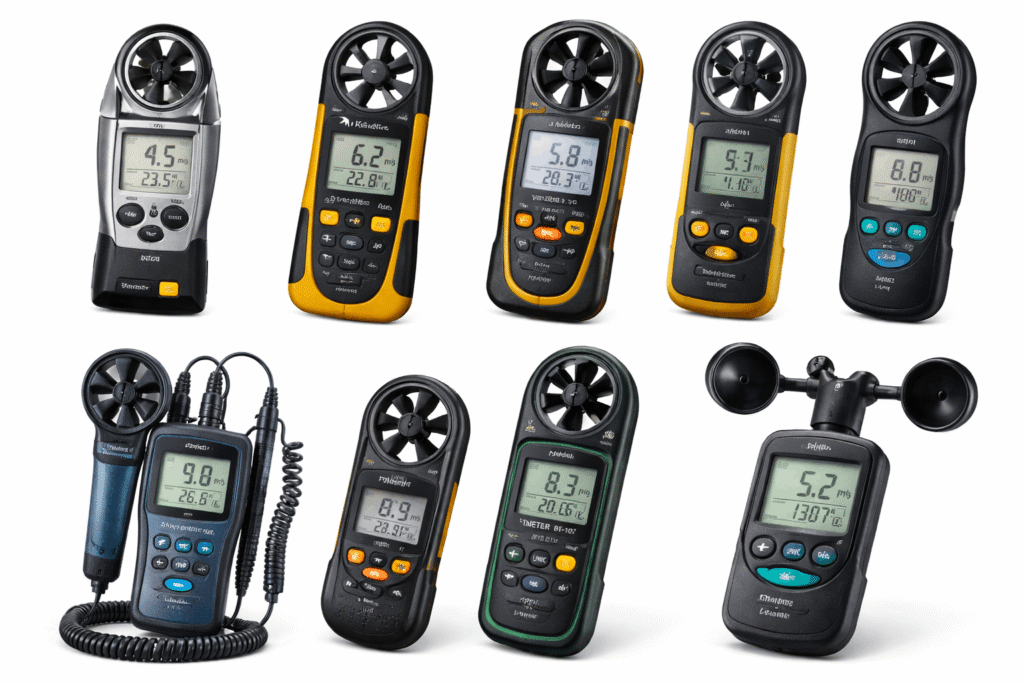
A handheld anemometer is a compact device that measures wind speed on demand. It typically includes a small impeller or ultrasonic sensor and a digital display.
Key characteristics include:
- Lightweight and portable design
- Battery-powered operation
- Instant wind speed readings
- Ideal for spot checks and short-term measurements
Handheld anemometers are commonly used on construction sites, during safety inspections, and in field research. They provide immediate feedback, which supports quick decision-making.
Their portability supports use in situations where mobility is critical. However, they are not intended for continuous, unattended monitoring.
What Is a Wind Meter?
A wind meter generally refers to a fixed or installed wind measurement device. These systems are mounted on masts, rooftops, or towers and collect wind data over extended periods.
Wind meters often include:
- Continuous wind speed and direction monitoring
- Integration with data loggers or control systems
- Rugged housings for outdoor conditions
- Compatibility with building automation or renewable energy systems
Unlike high-speed anemometers, wind meters operate as part of a larger monitoring system. They collect long-term data that supports analysis, compliance, and performance tracking.
Key Differences Between Wind Meters and Handheld Anemometers
Although both tools measure wind speed, their purpose and functionality differ.
- Installation
- Handheld Anemometer: portable, no installation required
- Wind Meter: fixed mounting on a structure or mast
- Data Collection
- Handheld Anemometer: short-term readings
- Wind Meter: continuous monitoring and logging
- Power Source
- Handheld Anemometer: battery-operated
- Wind Meter: wired power or integrated system supply
- Application Scope
- Handheld Anemometer: inspections, safety checks, mobile field use
- Wind Meter: infrastructure monitoring, renewable energy assessment, automation systems
The difference lies in how data is used and collected. Spot measurements serve operational checks. Continuous monitoring supports analysis and system control.
When a Handheld Anemometer Makes Sense
A handheld wind meter is well-suited for scenarios where mobility and speed are priorities.
Typical use cases include:
- Jobsite safety checks before crane operations
- HVAC balancing and airflow assessments
- Agricultural field inspections
- Temporary weather condition verification
Field teams benefit from fast readings without permanent setup. The device fits easily into field toolkits and supports rapid deployment.
When Fixed Wind Meters Are the Better Choice
A fixed wind meter is appropriate when continuous wind data recording is required.
Common scenarios include:
- Renewable energy site assessment
- Building automation systems that respond to wind conditions
- Environmental monitoring stations
- Stormwater and infrastructure management
Continuous data helps identify patterns. It supports regulatory reporting and operational planning. Fixed wind meters often integrate with control panels or remote monitoring systems.
In these cases, a handheld anemometer would not provide sufficient long-term insight.
How to Choose the Right Tool for Your Application
Selecting between a wind meter and a handheld anemometer depends on three main factors:
- Duration of Measurement: Short-term checks favor handheld devices. Ongoing monitoring requires fixed systems.
- Data Requirements: Instant readings suit safety verification. Logged data supports compliance and performance analysis.
- Installation Environment: Portable tools work in changing field locations. Permanent installations serve facilities and infrastructure sites.
Wind measurement tools serve different purposes. A handheld anemometer provides portable, on-demand wind speed readings. A fixed Weatherflow wind meter delivers continuous data for analysis and control. Aligning the tool with operational needs ensures accurate, reliable results.
Businesses seeking to buy handheld anemometers often prioritize convenience and rapid measurement. Organizations focused on environmental monitoring or automation systems typically require the installation of wind meters. Clear operational goals simplify the decision process.