
Choosing the wrong trailer for a long or oversized load creates delays, compliance issues, and added costs. When equipment exceeds standard freight dimensions, two options come up most often: the RGN trailer and the extendable flatbed. Each serves a specific purpose. Knowing the difference helps shippers make the right call before the truck is ever booked.
What Is an RGN Trailer and How Does It Work?
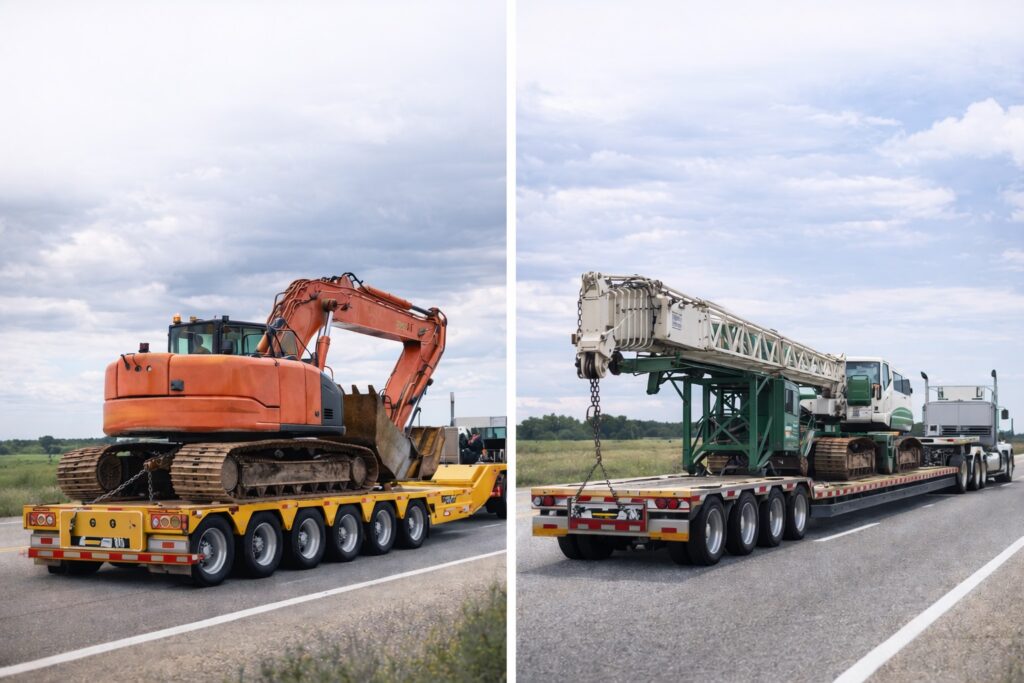
An RGN trailer — short for Removable Gooseneck — is a type of lowboy where the front section detaches from the deck. Hydraulics lower the gooseneck to the ground, creating a ramp. Self-powered equipment drives directly onto the trailer without cranes or forklifts.
This loading method is one of the biggest advantages RGN trucking offers over other equipment types. It saves time at the job site and reduces the need for additional machinery. RGN trailers also sit low to the ground, making them the preferred option for over-height loads that would otherwise exceed road clearance limits.
Depending on axle configuration, RGN trailers can carry up to 68,000 kg (150,000 lbs). That capacity covers a wide range of industrial and construction freight.
What Is an Extendable Flatbed and When Is It the Right Fit?
An extendable flatbed is a standard flatbed trailer built with a telescoping deck. The trailer stretches lengthwise to accommodate cargo that exceeds the length of a fixed flatbed. It is commonly used for structural steel, long pipes, lumber bundles, and prefabricated building components.
Unlike an RGN trailer, the extendable flatbed rides higher off the ground. That makes it less suitable for over-height loads but well-suited for freight that is simply too long for standard equipment. Loading typically requires forklifts or cranes, as there is no built-in ramp function.
Extendable flatbeds are a practical, cost-effective choice when length is the primary constraint and height is not a concern.
How Do These Two Trailer Types Compare Side by Side?
Here is a direct comparison of the key differences:
- Deck height: RGN trailers ride low to the ground; extendable flatbeds sit higher
- Loading method: RGN trailers use a detachable gooseneck ramp; extendable flatbeds require external lifting equipment
- Best for: RGN handles over-height and heavy self-powered equipment; extendable flatbeds handle long but not necessarily tall freight
- Weight capacity: RGN trailers support heavier loads depending on axle setup
- Permitting: Both may require oversize permits, but RGN trailer transport typically involves more complex regulatory coordination
Which Option Is Right for Your Freight?
The answer depends on three factors: height, weight, and how the cargo gets loaded.
If your equipment is self-powered, over-height, or extremely heavy, RGN trailer transport is almost always the better choice. The low deck and detachable ramp make loading safer and faster without extra equipment on site.
If your freight is long but fits within standard height limits, an extendable flatbed is usually the more straightforward and cost-efficient option. It handles length without the complexity of RGN logistics.
For loads that push both limits, experienced RGN trucking companies can assess the cargo and recommend the right configuration. Permit requirements, route planning, and axle weight distribution all factor into the final decision.
Ready to Move Your Oversized Load?
MGA International coordinates RGN trailer transport and extendable flatbed shipments across Canada and the United States. The team manages permitting, route planning, and transportation partner coordination from start to finish. Contact MGA International today to get a quote for your next oversized freight move.