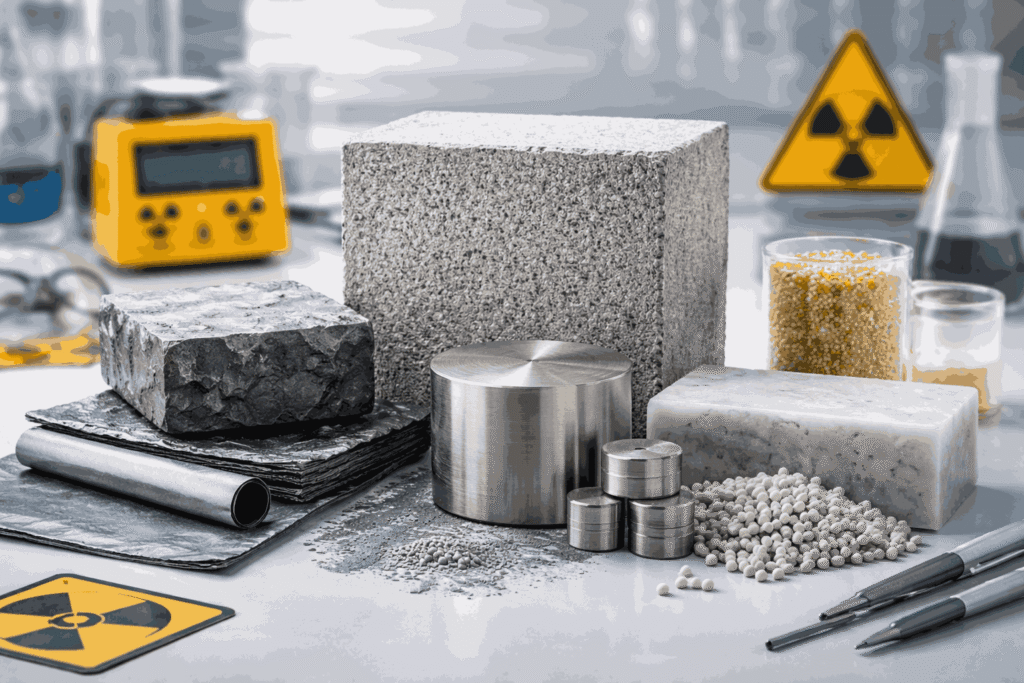

Radiation shielding plays a critical role in protecting people, equipment, and environments from harmful exposure. For decades, lead has been the most widely used material for this purpose due to its effectiveness, affordability, and physical properties. However, increasing concerns around environmental impact, human health, and long-term disposal have prompted many industries to re-evaluate their reliance on lead-based shielding.
As regulatory scrutiny grows and sustainability becomes a higher priority, alternative radiation shielding materials are gaining attention. Each option offers different performance characteristics, trade-offs, and suitability depending on the application.
This article compares three commonly used categories of radiation shielding materials: conventional lead shielding, lead composite shielding, and lead-free shielding.
Conventional Lead Shielding
Traditional lead shielding has long been considered the standard in radiation protection. Its effectiveness comes from several inherent material properties.
Lead is:
- Dense, allowing it to absorb and block radiation efficiently
- Soft and malleable, making it easy to shape and fabricate
- Resistant to corrosion
- Durable over long service life
In its pure form, lead is brittle and impractical for flexible applications. To address this, it is often combined with binders such as vinyl or rubber. This enables its use in items like protective aprons and curtains in radiological environments.
Limitations of Conventional Lead Shielding
Despite its effectiveness, lead presents several challenges:
- Toxicity during mining, processing, handling, and disposal
- Environmental concerns related to long-term contamination
- Increasing restrictions in non-radiation applications, such as water pipes, paints, and fuels
While lead remains widely used in radiation shielding, these concerns have accelerated interest in alternative materials that reduce health and environmental risks.
Lead Composite Shielding
Lead composite shielding is designed to retain lead’s radiation-blocking performance while addressing some of its practical drawbacks. This approach blends lead with lighter materials or other metals to create a composite structure.
Key Characteristics
- Reduced weight compared to solid lead
- Comparable radiation attenuation performance
- Improved handling and ergonomic benefits
- Greater flexibility in design and fabrication
By lowering overall mass, lead composite shielding can be easier to transport and install, particularly in mobile or wearable applications. However, because lead is still present, concerns about toxicity and disposal remain, though reduced.
Lead-Free Radiation Shielding
Lead-free shielding materials represent a growing segment of radiation protection solutions. These materials typically use combinations of polymers and high-density metals other than lead to block radiation.
Advantages of Lead-Free Shielding
- Non-toxic and safer to handle
- Reduced environmental impact
- Available in a range of densities and strengths
- Flexible and adaptable for various applications
- Capable of managing heat generated during radiation exposure
These materials are increasingly used where regulatory compliance, sustainability, or user safety are priorities.
Comparing Radiation Shielding Options
Each radiation shielding material category serves different needs:
- Conventional lead shielding offers proven performance and cost efficiency, but raises health and environmental concerns.
- Lead composite shielding balances weight reduction with performance while still relying on lead content.
- Lead-free shielding prioritizes safety and sustainability, with ongoing advancements improving its effectiveness and affordability.
The best choice depends on factors such as regulatory requirements, weight constraints, installation environment, long-term use, and disposal considerations.
Choosing the Right Radiation Shielding Material
No single shielding material is ideal for every application. Each option presents a different balance of performance, safety, cost, and environmental impact. Understanding these differences allows decision-makers to select a radiation shielding solution that aligns with operational needs and compliance requirements.
By evaluating conventional lead, lead composites, and lead-free alternatives side by side, organizations can make informed choices that support both protection and responsibility.