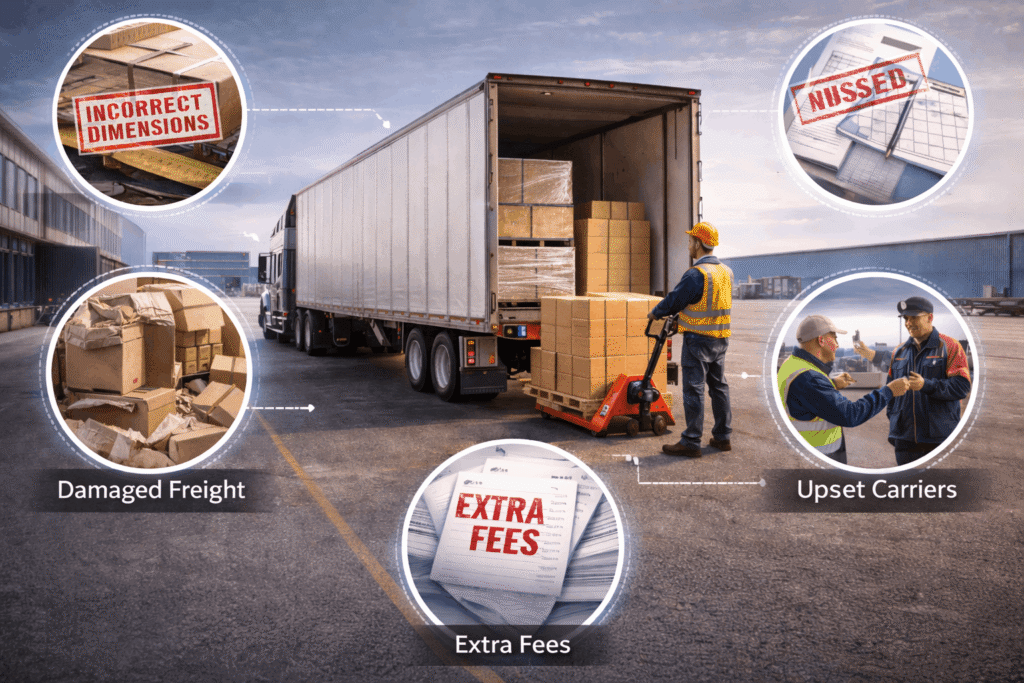

Less-than-truckload shipping offers small businesses an affordable way to move freight across North America. However, many companies unknowingly make expensive mistakes that drain budgets and delay deliveries. Understanding these common pitfalls helps you work more effectively with LTL shipping companies and protect your bottom line.
1. Misclassifying Your Freight Creates Unexpected Complications
Freight class determines your shipping rates, yet many businesses get it wrong. The National Motor Freight Traffic Association uses 18 classes ranging from 50 to 500. Your shipment’s density, stowability, handling requirements, and liability all factor into this classification.
Misclassifying freight leads to reclassification fees and surprise charges. Small businesses often estimate dimensions instead of measuring precisely, creating discrepancies that LTL trucking companies catch during inspection. This error can significantly impact your transportation budget and strain vendor relationships.
To avoid this mistake:
- Invest in a freight scale and measuring tape for accurate measurements
- Calculate density by dividing weight by cubic feet
- Request classification guidance from your carrier before booking
- Use online freight class calculators as a reference tool
- Keep detailed records of past shipments for consistency
2. Inadequate Packaging Leads to Damage Claims and Lost Revenue
Poor packaging ranks among the top reasons for freight damage claims. LTL shipments move through multiple terminals and handling points. Without proper protection, your goods risk damage from loading, unloading, and consolidation with other freight.
Damaged freight creates a cascade of problems beyond immediate losses. You’ll file claims, manage returns, and potentially lose customers. Many LTL shipping services limit liability coverage, leaving you responsible for losses exceeding standard rates. The time spent resolving damage claims often exceeds the original shipping duration.
Double-boxing works well for delicate items while corner protectors absorb impacts. Stretch wrap secures items and prevents shifting during transit. Using pallets rated below your shipment’s weight can collapse during handling, destroying your products and creating safety hazards.
3. Overlooking Accessorial Charges Destroys Your Shipping Budget
Accessorial charges catch many shippers off guard. These additional fees cover services beyond standard dock-to-dock delivery. Liftgate service, inside delivery, residential pickup, and limited access locations all trigger extra charges that quickly add up.
Small businesses operating on tight margins cannot absorb these unexpected expenses. LTL trucking clearly list these fees, but many shippers don’t review the fine print until the invoice arrives. Planning ahead helps you understand the full scope of your shipping investment.
Request a detailed quote that includes all potential accessorial charges upfront. Communicate special requirements clearly when booking shipments. If possible, arrange deliveries to commercial addresses with loading docks. Consider consolidating shipments to locations requiring expensive accessories.
4. Inaccurate Documentation Causes Delays and Extra Penalties
Incomplete or incorrect paperwork causes shipment delays and penalties. The bill of lading serves as your legal contract with the carrier. Missing information, wrong addresses, or inconsistent weight declarations create problems throughout the shipping process.
Documentation errors force carriers to contact you for corrections, delaying your shipment. Customs holds occur when cross-border paperwork contains mistakes. Some LTL shipping companies charge correction fees for updating documentation after pickup. Your customer waits longer for their order while you scramble to fix preventable problems.
Create standardized templates for bills of lading that include all required information. Double-check addresses and contact numbers before submitting. For international shipments, ensure commercial invoices match your BOL exactly. Keep copies of all documentation for your records and potential claims.
5. Choosing Carriers Based Only on Rates Backfires Eventually
Selecting the cheapest carrier often creates more problems in the long run. Rock-bottom rates may indicate poor service, limited coverage, or hidden fees. Unreliable carriers damage your reputation when shipments arrive late or damaged.
Building relationships with quality LTL trucking companies provides value beyond low rates. Reliable carriers offer consistent transit times, better claims handling, and proactive communication. They understand your shipping patterns and can suggest strategies for efficiency. Their expertise helps you avoid the other mistakes on this list.
Evaluate carriers on multiple factors including on-time delivery rates and claims ratios. Read customer reviews and ask for references from similar businesses. Start with smaller shipments to test service quality before committing to larger contracts.
6. Last-Minute Bookings Force You Into Expensive Expedited Options
Rush shipping charges significantly more than standard service. Waiting until the last minute forces you into expedited options that strain your budget. Tight timelines also limit your carrier choices, reducing your negotiating power.
Last-minute bookings prevent you from comparing rates or optimizing shipment consolidation. You cannot take advantage of scheduled pickup routes that offer better efficiency. The stress of rush orders increases the likelihood of making other mistakes like incorrect documentation or poor packaging.
Plan shipments at least three to five business days in advance when possible. Build buffer time into customer delivery promises to accommodate potential delays. Maintain relationships with multiple carriers to access capacity during peak seasons.
Partner With Reliable LTL Experts
As a comprehensive transportation and logistics provider, MGA International offers cross-border door-to-door delivery through LTL, FTL, flatbed services, and a suite of other freight management solutions. Our access to highly-skilled drivers and meticulously-maintained vehicles has secured our place as one of the leading LTL shipping companies on the continent.
We are committed to delivering a safe, effective, and uninterrupted transportation experience for all types of cargo. Our team helps you avoid these costly mistakes through transparent processes, accurate classification assistance, and reliable service across North America.
Ready to optimize your LTL shipping strategy? Contact MGA International today and discover how our experienced logistics team can help your business ship smarter, not harder.