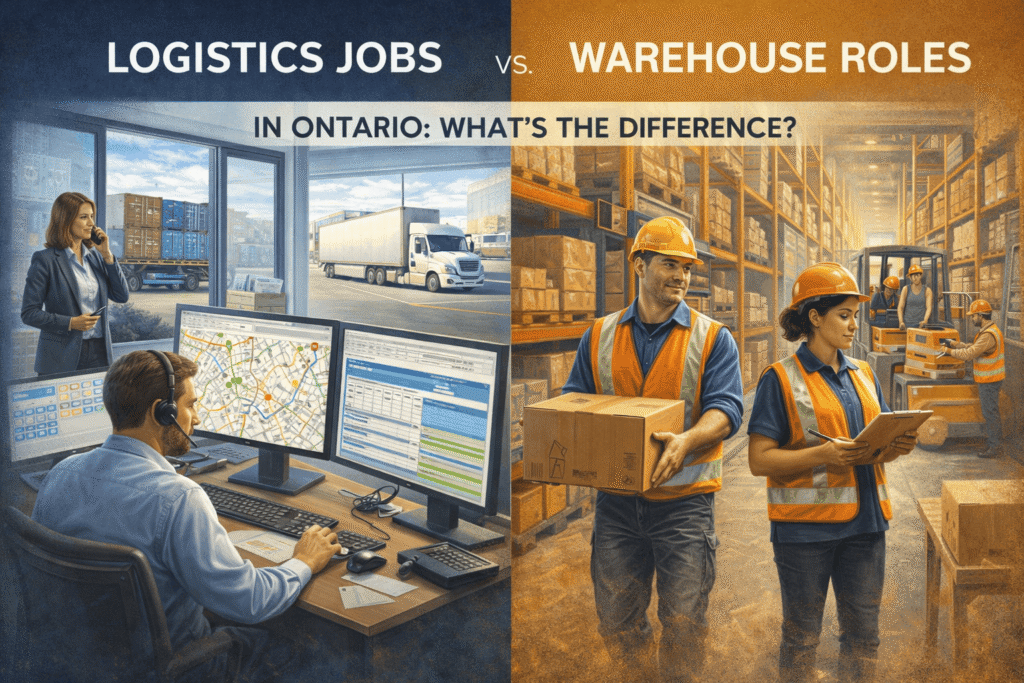

Many job seekers use the terms “logistics” and “warehousing” interchangeably. While they are closely connected, they are not the same. Understanding the difference can help you apply more strategically and avoid mismatched expectations.
Warehousing typically focuses on the physical handling of goods inside a facility. Logistics, on the other hand, involves the broader coordination of how goods move from one point to another. Warehousing is part of the logistics chain, but logistics includes planning, transportation, inventory strategy, and supply chain management.
In Ontario’s manufacturing and distribution economy, both paths offer steady employment. If you are exploring logistics jobs in Ontario, it helps to first understand where warehouse roles fit within the bigger picture.
Skill Set, Flexibility, and Pay Differences
Warehouse roles generally focus on hands-on tasks. These may involve:
- Receiving and shipping goods
- Organizing inventory
- Preparing orders
- Operating material handling equipment
Logistics positions often require more coordination and planning. These roles may involve:
- Scheduling shipments
- Managing inventory systems
- Coordinating suppliers
- Tracking deliveries
- Communicating with carriers
Logistics-related roles often require stronger communication skills, technical familiarity with inventory software, and attention to documentation.
Pay levels vary depending on responsibility and experience. Entry-level warehouse positions typically align with general labour wage ranges in Ontario, while logistics coordination roles may offer higher compensation due to planning responsibilities and administrative oversight. Specific wages depend on region, employer size, and level of experience.
Flexibility can also differ. Warehouse jobs are usually shift-based and on-site, while some remote logistics jobs allow partial work-from-home arrangements depending on the employer and the nature of coordination tasks.
Which Jobs Are Remote-Friendly
Most warehouse roles require physical presence. Inventory handling, packaging, and material movement must be performed on-site.
However, remote logistics jobs are becoming more common in areas such as:
- Shipment coordination
- Supply Chain planning
- Freight tracking
- Inventory analytics
These positions rely heavily on digital systems, communication tools, and reporting platforms. While not all logistics jobs in Ontario are remote, administrative and coordination roles may offer hybrid options.
The growth of digital supply chain tools has increased the possibility of off-site logistics coordination, particularly for larger organizations managing multi-site operations.
What Employers Expect From Candidates
Warehouse employers often prioritize:
- Reliability
- Physical stamina
- Basic safety awareness
- Ability to work structured shifts
- Team collaboration
Logistics employers may look for:
- Strong communication skills
- Comfort with software systems
- Organizational ability
- Attention to detail
- Problem-solving capability
Both career paths require accountability and efficiency. Employers across Ontario’s distribution and manufacturing sectors value candidates who understand deadlines and operational flow.
When applying for logistics warehouse jobs, it is important to read job descriptions carefully. Some roles may lean more toward physical warehousing tasks, while others involve planning and coordination responsibilities.
Conclusion – Apply Strategically
Logistics and warehousing are connected but distinct parts of Ontario’s supply chain ecosystem. Warehouse work focuses on physical operations within facilities, while logistics roles manage the broader movement and coordination of goods.
If you are considering logistics jobs in Ontario, evaluate whether you prefer hands-on work or planning and coordination responsibilities. Understanding the difference will help you target roles that match your strengths. Making informed choices increases your chances of long-term job satisfaction and steady employment.
Explore active listings!