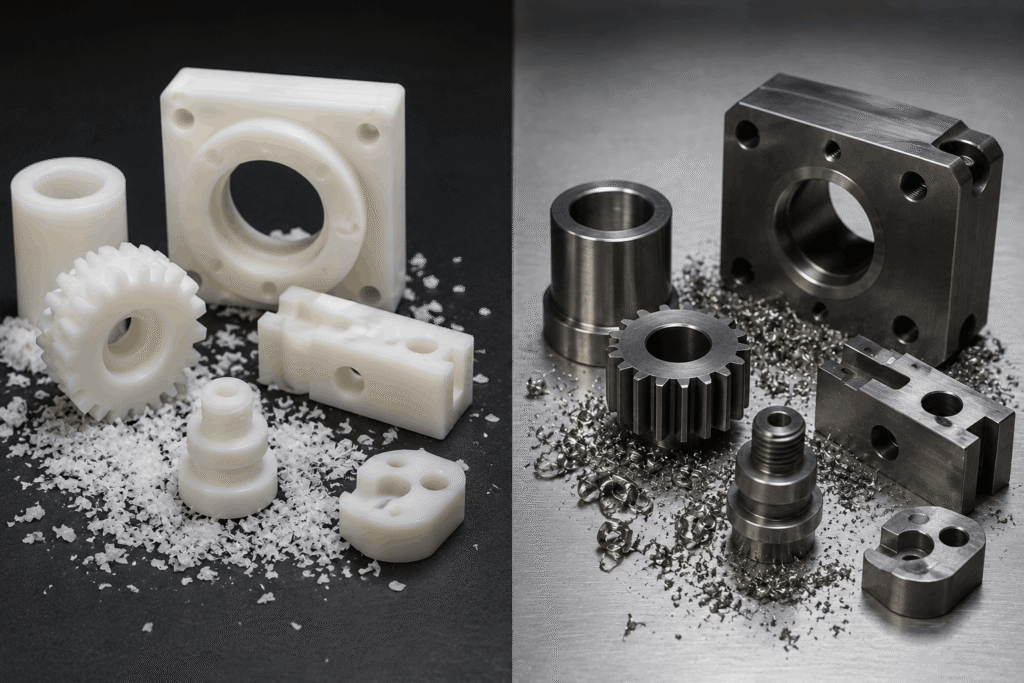

Material selection directly affects machining cost, tolerance control, part weight, and long-term performance. When comparing plastic CNC services with metal machining, the right choice depends on load requirements, environmental exposure, regulatory needs, and fabrication objectives.
Plastic machining is often selected for lightweight components, chemical resistance, electrical insulation, and reduced post-processing needs. Metal machining remains suitable for high-load, high-temperature, and structural applications where maximum rigidity is required. A technical comparison helps procurement teams, engineers, and designers align material selection with the project scope.
Cost and ROI Dimensions in Plastic vs Metal CNC Services
Raw Material Procurement and Tool Wear
Plastic materials can offer relative cost advantages compared with many metal alloys, especially when reduced weight, corrosion resistance, and lower finishing requirements are important. Materials such as HDPE, acrylic, polycarbonate, nylon, acetal, and PVC can support functional components without the procurement cost associated with many metals.
Tool wear also differs between plastics and metals. Softer plastic materials generally place less stress on cutting edges, which can reduce tooling replacement frequency during repeat production. This supports better cost control for custom plastic fabrication runs.
Operational Efficiency and Post-Processing
Plastic components often require fewer secondary finishing steps than metal parts. Many plastic materials can be machined, routed, polished, or formed without coating, painting, plating, or corrosion protection.
This can improve workflow efficiency for guards, covers, panels, housings, display components, and industrial parts. However, some plastic grades may still require stress relief, edge finishing, bonding, or polishing, depending on the application.
Performance and Quality Standards for CNC Services
Dimensional Stability and Machining Tolerances
Metal machining can often support tighter baseline tolerances because metals typically provide higher rigidity and lower thermal movement. This makes metal suitable for structural components or high-load parts where dimensional precision must remain stable under stress.
Plastic machining requires careful control of clamping pressure, tooling geometry, feed rate, and heat generation. Many plastics expand more than metals during machining, so dimensional planning must account for thermal expansion during production and final use.
Strength, Weight, and Environmental Resistance
Metal remains suitable for parts exposed to heavy loads, high heat, or structural stress. However, plastics provide clear advantages where reduced weight, corrosion resistance, chemical resistance, impact absorption, or electrical insulation is required.
Plastic parts may be suitable for wear strips, machine guards, fluid handling components, electrical insulators, signage parts, display fixtures, and food-processing components. For application-specific guidance, request a material consultation from Johnston Industrial Plastics Limited for custom fabrication requirements.
Timeline and Machinability Factors in CNC Milling Services
Cutting Speeds and Heat Dissipation
Plastic materials can often support faster material removal rates than metals because they are easier to cut. This can improve production efficiency for parts requiring routing, drilling, profiling, or CNC milling services.
However, heat control is critical during plastic machining. Plastics can soften, melt, chip, or develop friction burns when spindle speed, feed rate, cutter geometry, and chip evacuation are not properly managed. Coolant strategy, air blast, sharp cutters, and controlled passes may be required depending on the selected plastic grade.
Tooling Adjustments and Process Optimization
Plastic machining requires different tooling decisions than metal machining. Fabricators must account for material flexibility, internal stress, melting point, chip formation, and surface finish requirements.
To optimize feeds and speeds, begin by confirming the material grade, sheet thickness, and tolerance requirements. Next, select sharp tooling designed for plastics, use feed rates that reduce heat build-up, maintain effective chip removal, and test tolerance stability before full production. For stress-sensitive materials, annealing may be used before or after machining to relieve internal stress and improve dimensional stability.
Compliance and Material Selection for Specialized CNC Services
Navigating Industry-Specific Regulations
Specialized machining projects may require documentation, traceability, and compliance with applicable standards such as ASTM, UL, CSA, FDA-related requirements, or other industry-specific specifications. Aerospace, medical, electrical, food processing, and transportation applications often require more detailed certification review than general fabrication work.
Material selection should be based on technical performance, documentation, and end-use conditions rather than appearance or price alone. The selected plastic or metal must align with load requirements, cleaning conditions, flame ratings, chemical exposure, and regulatory expectations.
Sourcing from Local Hubs
Local material sourcing can improve supply chain reliability for custom fabrication. Access to regional inventory helps reduce procurement delays, improve communication, and support better production planning.
For plastic CNC machining, local supply can also help teams confirm sheet size, thickness, grade, finish, and documentation before machining begins. This reduces the risk of production delays caused by unavailable materials, incorrect specifications, or inconsistent grade selection.
Which CNC Machining Service Is Right for Your Project?
Balancing Application Loads and Budget
The right CNC machining service depends on the balance between application loads, tolerance requirements, budget, and material performance. Metal may be the better option for high-load structural parts, high-temperature environments, or applications requiring maximum rigidity.
Plastic may be more suitable where the project requires lower weight, corrosion resistance, dielectric properties, impact resistance, or reduced finishing needs. Aligning material properties with the project scope helps balance initial manufacturing cost with long-term durability.
Next Steps for Your Manufacturing Strategy
Before selecting plastic or metal machining, define the part’s function, operating environment, load requirements, tolerance expectations, and compliance needs. This makes it easier to compare material performance against fabrication cost and long-term service conditions.
For projects involving custom plastic fabrication, Johnston Industrial Plastics Limited can support material selection, sheet availability, and fabrication planning. Contact Johnston Industrial Plastics Limited to request a consultation for custom plastic fabrication and determine whether plastic CNC services are the right fit for your project.