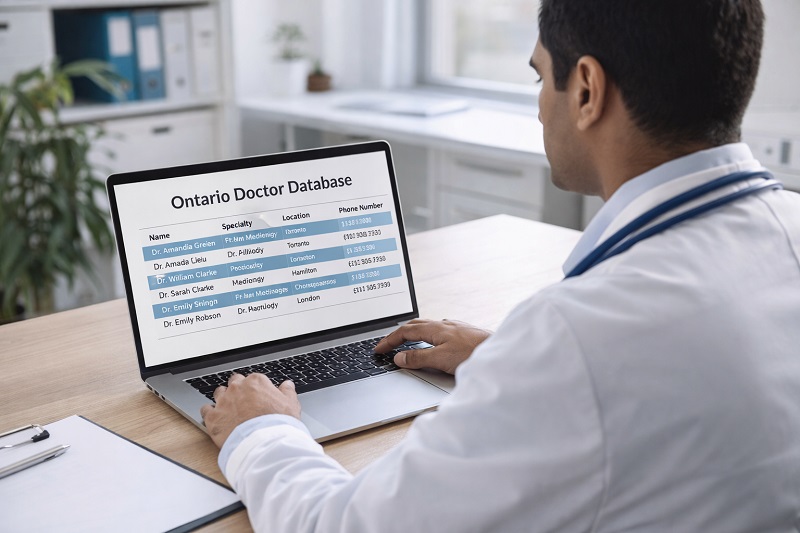

For organizations targeting medical professionals, access to accurate, searchable physician data is essential. Whether the goal is outreach, market analysis, or product communication, a centralized doctor database supports informed decision-making.
The challenge is not whether physician data is needed, but how to access it. Organizations must choose between building an internal doctor database platform or purchasing access to an existing directory. When the focus is regional, the implications of this decision become even more significant.
Understanding the trade-offs between cost, data quality, scalability, and ongoing maintenance helps determine the most practical option.
Cost and Time Investment: Build vs. Buy
Building an Internal Platform
Creating a custom doctor database requires a substantial upfront and ongoing investment. Typical requirements include:
- Software development and system design
- Data sourcing and licensing
- Legal and compliance review
- Secure hosting and infrastructure
- Ongoing maintenance, updates, and user support
Development timelines often stretch over several months. Costs continue beyond launch due to data refresh cycles, system updates, and technical staffing.
Purchasing an Existing Directory
Buying access to an established doctor directory significantly reduces setup time. The platform is already built, populated, and operational. Organizations can begin using the data almost immediately, avoiding development delays and minimizing internal resource strain.
For teams with limited technical capacity or tight timelines, this option provides faster time-to-value.
Data Quality and Reliability
Risks of Building Your Own Database
The most significant challenge in building a doctor database is maintaining data accuracy. Physician information changes frequently due to:
- Practice relocations
- Specialty changes
- Licensing updates
- New affiliations
Without a structured verification and update process, internally sourced data can quickly become outdated, reducing its usefulness and increasing compliance risk.
Advantages of Purchasing Curated Data
Licensed directories typically rely on standardized verification processes and recurring updates. These datasets commonly include:
- Licensing and registration status
- Medical specialties and subspecialties
- Practice locations and contact details
- Organizational or hospital affiliations
Regular review cycles help preserve data integrity over time, which is especially important for regional targeting.
Customization and Scalability
Internal Builds
Custom platforms allow organizations to design features around specific workflows. However, expanding functionality, such as adding new regions, specialties, or integrations, often requires additional development work and cost.
Scaling an in-house system can become complex as data volume and user requirements grow.
Purchased Platforms
Most ready-made directories offer configurable filters, export options, and integration support. These features allow teams to segment by geography, specialty, or practice type without having to rebuild the system.
For organizations planning to expand beyond a single province or work across multiple medical segments, this flexibility supports long-term growth with less operational overhead.
Maintenance, Compliance, and Technical Support
Ongoing Demands of an Internal System
Maintaining a doctor database internally means managing:
- Data security and privacy compliance
- System uptime and performance
- Bug fixes and feature updates
- Integration with CRMs or analytics tools
These responsibilities require dedicated technical staff and continuous oversight.
Vendor-Managed Maintenance
With a licensed directory platform, maintenance responsibilities are handled by the platform provider. This includes infrastructure management, data updates, and technical support. Organizations can focus on using the data rather than maintaining the system that delivers it.
Internal Resources vs. External Expertise
Building a database places full responsibility for data accuracy, compliance, and system performance on internal teams. This approach may suit organizations with strong technical infrastructure and long-term development capacity.
Purchasing access shifts that responsibility to specialists who focus exclusively on healthcare data management. For many organizations, this reduces risk while improving operational efficiency.
Making the Practical Choice
Both approaches can support physician targeting, but the optimal choice depends on priorities:
- Build if full control, customization, and long-term internal ownership outweigh cost and complexity.
- Buy if speed, data reliability, scalability, and lower operational burden are more important.
For organizations targeting a specific regional audience, purchasing access to a verified physician directory often delivers faster results. This reduces internal demands, making it a practical and cost-efficient solution.