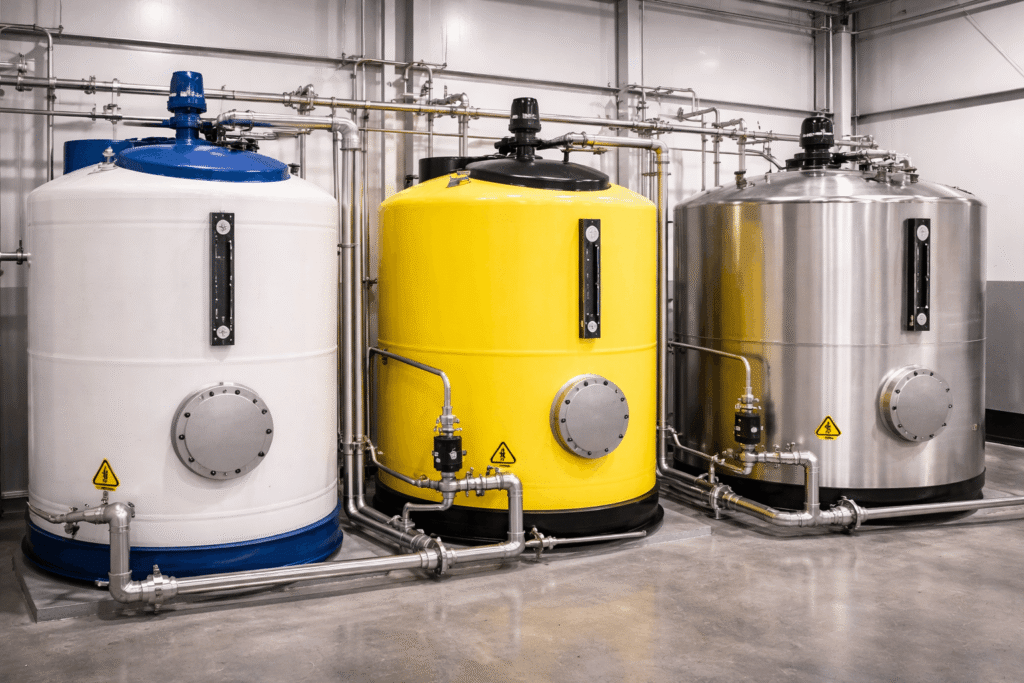

Sodium Hypochlorite Storage Tanks: FRP vs. Polyethylene vs. Steel
Sodium hypochlorite plays a critical role in water treatment, sanitation systems, and industrial processing. However, storing this highly reactive chemical requires careful selection of materials. Improper tank materials can degrade quickly, cause contamination, and increase safety risks. Facilities evaluating sodium hypochlorite tanks must choose storage systems designed to withstand the chemical’s corrosive and oxidizing properties.
At Belding Tank Technologies, engineered sodium hypochlorite storage tank systems are designed to maintain chemical stability and ensure long-term operational reliability.
Understanding Sodium Hypochlorite’s Reactivity
Sodium hypochlorite, commonly known as bleach, is a powerful oxidizing agent used for disinfection and water purification. While effective in treatment processes, it can degrade rapidly when exposed to incompatible materials, heat, or sunlight.
The chemical releases oxygen during decomposition, which can build up pressure in a tank if not properly vented. It also reacts with certain metals, accelerating corrosion. Because of these properties, storage systems must be designed with materials that resist oxidation, prevent contamination, and maintain structural integrity over time.
Facilities managing sodium hypochlorite storage must account for these characteristics when specifying tanks.
Risks With Poor Tank Material Selection
Selecting an incompatible storage material can lead to serious operational issues. Poor tank selection may result in:
- Accelerated corrosion or material degradation
- Chemical contamination that reduces bleach effectiveness
- Structural failure caused by pressure buildup
- Increased maintenance and replacement costs
Metal tanks, for example, often require specialized coatings to protect against oxidizing chemicals. Over time, these coatings can break down, exposing the underlying material. Once this occurs, corrosion progresses quickly and compromises the tank’s integrity.
These risks highlight why facilities invest in properly engineered sodium hypochlorite tanks built for chemical compatibility.
FRP Tank Benefits in Bleach Storage
Fiberglass reinforced plastic (FRP) tanks are widely used for bleach storage due to their corrosion resistance and structural durability. Sodium hypochlorite storage tank systems built from FRP provide several advantages:
- Excellent resistance to oxidation and chemical attack
- Customizable resin systems designed for bleach compatibility
- Structural strength capable of handling pressure and environmental stress
- UV resistance for outdoor installations
- Long service life with minimal maintenance requirements
FRP tanks can also incorporate specialized fittings, vent systems, and secondary containment features. These design elements help maintain chemical stability and support regulatory compliance.
Because of these characteristics, many facilities consider FRP one of the most reliable materials for storing sodium hypochlorite.
Limitations of Polyethylene Tanks
Polyethylene tanks are often used for smaller storage applications due to their lower upfront cost and lightweight construction. However, polyethylene has limitations when used with sodium hypochlorite.
Over time, exposure to oxidizing chemicals can weaken the polymer structure. Polyethylene tanks may also experience UV degradation if installed outdoors without protective coatings. In high-volume industrial environments, the structural limitations of polyethylene can lead to reduced lifespan compared with FRP systems.
These factors mean polyethylene tanks may be suitable for limited applications but often require more frequent replacement.
Cost, Lifespan, and Compliance Comparison
When evaluating sodium hypochlorite tanks, facilities must consider total lifecycle cost rather than the initial purchase price.
Steel tanks generally require coatings and ongoing corrosion management. Polyethylene tanks offer lower initial cost but shorter service life in harsh chemical environments.
FRP tanks typically provide the most balanced solution. Their corrosion resistance reduces maintenance expenses, while their structural strength supports long-term performance. Many facilities report service lives exceeding two decades when FRP tanks are properly designed and maintained.
Compliance considerations also favor FRP designs, which can be engineered to meet regulatory standards and integrate monitoring systems.
Best Practices for Safe Long-Term Storage
Facilities storing bleach should follow several key practices to maintain safe sodium hypochlorite storage:
- Use chemically compatible tank materials
- Install proper venting systems to manage gas release
- Protect tanks from excessive heat and direct sunlight
- Monitor storage conditions regularly
- Work with experienced tank manufacturers for system design
These practices ensure that stored bleach remains effective while reducing the risk of structural failure.
Conclusion
Selecting the right material for sodium hypochlorite tanks directly affects safety, chemical stability, and operational costs. While polyethylene and steel tanks may serve certain applications, fiberglass-reinforced plastic often offers the most reliable balance of durability and corrosion resistance.
Facilities investing in properly engineered sodium hypochlorite storage tank systems gain improved longevity, reduced maintenance, and stronger regulatory compliance.
For engineered solutions built to handle demanding bleach storage environments, contact Belding Tank Technologies.