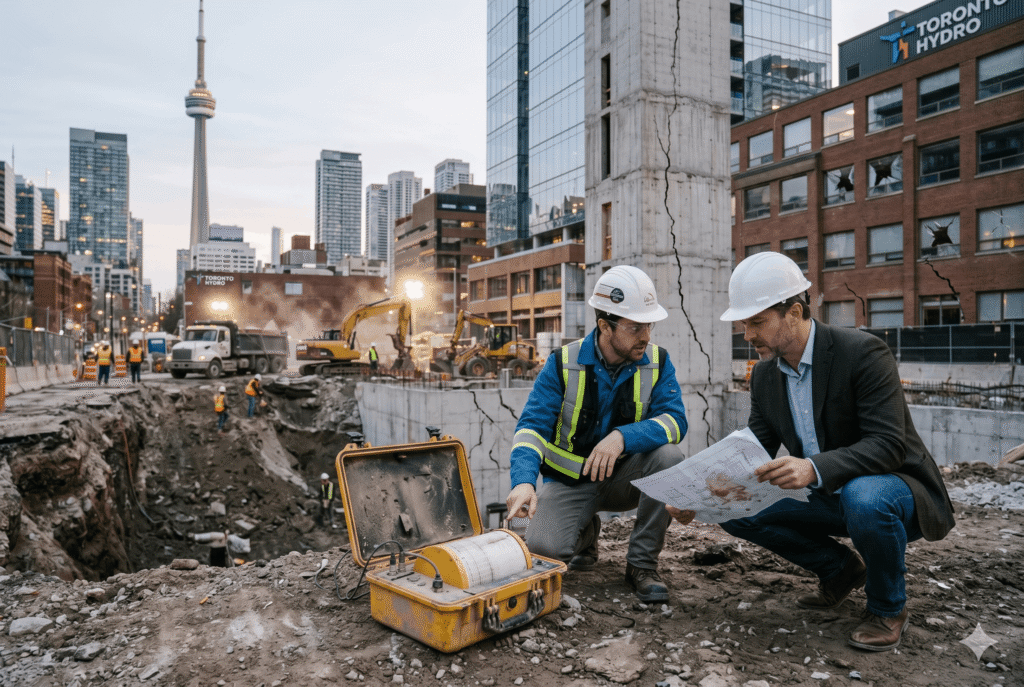

Construction activity often involves unavoidable vibration, but unmanaged vibration can quickly become a project risk rather than a controlled variable. In complex urban and infrastructure environments, construction vibration monitoring services provide essential data that helps developers understand how site activity interacts with surrounding structures, utilities, and communities. Without this visibility, decision-making becomes reactive, increasing exposure to technical and regulatory challenges.
Modern construction projects operate under tighter compliance thresholds and greater public scrutiny. Ground-borne vibration from piling, excavation, and heavy equipment can propagate beyond project boundaries, affecting nearby assets and triggering disputes. Measured monitoring ensures that vibration levels remain within acceptable limits while supporting informed construction planning.
Why Ground Vibration Monitoring Is Critical in Modern Construction
Ground vibration monitoring plays a central role in protecting both project performance and the surrounding environments. Construction sites often coexist with infrastructure such as transit systems, utilities, and commercial buildings that are sensitive to vibration.
Engineering-led monitoring programs establish baseline conditions, track vibration levels in real time, and provide data to guide construction activities. This allows project teams to validate compliance with regulatory standards while minimizing the risk of structural damage and stakeholder disruption.
10 Risks Developers Face Without Ground Vibration Monitoring
- Undetected Structural Stress: Vibration impacts on adjacent buildings may go unnoticed until visible damage occurs.
- Regulatory Non-Compliance: Exceeding permissible vibration limits can lead to fines, work stoppages, or permit challenges.
- Project Delays: Unanticipated vibration issues often require corrective measures that disrupt schedules.
- Increased Liability Exposure: Lack of monitoring data makes it difficult to defend against damage claims.
- Damage to Adjacent Infrastructure: Utilities, tunnels, and transit systems can be affected by sustained vibration levels.
- Community Complaints and Disputes: Noise and vibration concerns from nearby stakeholders can escalate quickly in the absence of measurable data.
- Inefficient Construction Methods: Without feedback, construction activities may operate at vibration levels higher than necessary.
- Unexpected Equipment Constraints: Equipment may need to be modified or replaced after issues arise, increasing costs.
- Reputational Impact: Poor vibration management can undermine a developer’s credibility on future projects.
- Costly Retrofitting and Remediation: Addressing damage after occurrence is significantly more expensive than prevention.
How Ground Vibration Monitoring Supports Risk Mitigation
A structured monitoring strategy transforms vibration from an uncertainty into a measurable parameter. Real-time data collection enables adjustments to construction methods, sequencing, and equipment operation to maintain acceptable thresholds.
Monitoring also supports transparent communication with regulators and stakeholders by providing verifiable data. This reduces disputes and strengthens compliance documentation throughout the project lifecycle.
Additionally, integrating vibration analysis into construction planning enables proactive mitigation measures, including equipment selection, work scheduling, and site-specific control strategies. These measures contribute to safer operations and more predictable project outcomes.
Managing Construction Risk Through Measured Data
Effective construction management depends on accurate data and proactive decision-making. Ground vibration is a controllable factor when it is monitored and analyzed using structured engineering approaches.
Valcoustics Canada Ltd provides comprehensive monitoring and analysis as a consulting engineering partner, supporting developers across infrastructure and large-scale construction projects. By integrating advanced measurement systems and data-driven insights, project risks are reduced while compliance objectives are maintained. Incorporating structural vibration monitoring into construction strategies ensures long-term asset protection and operational reliability. Connect with Valcoustics to implement monitoring programs that support informed, compliant, and efficient project delivery.