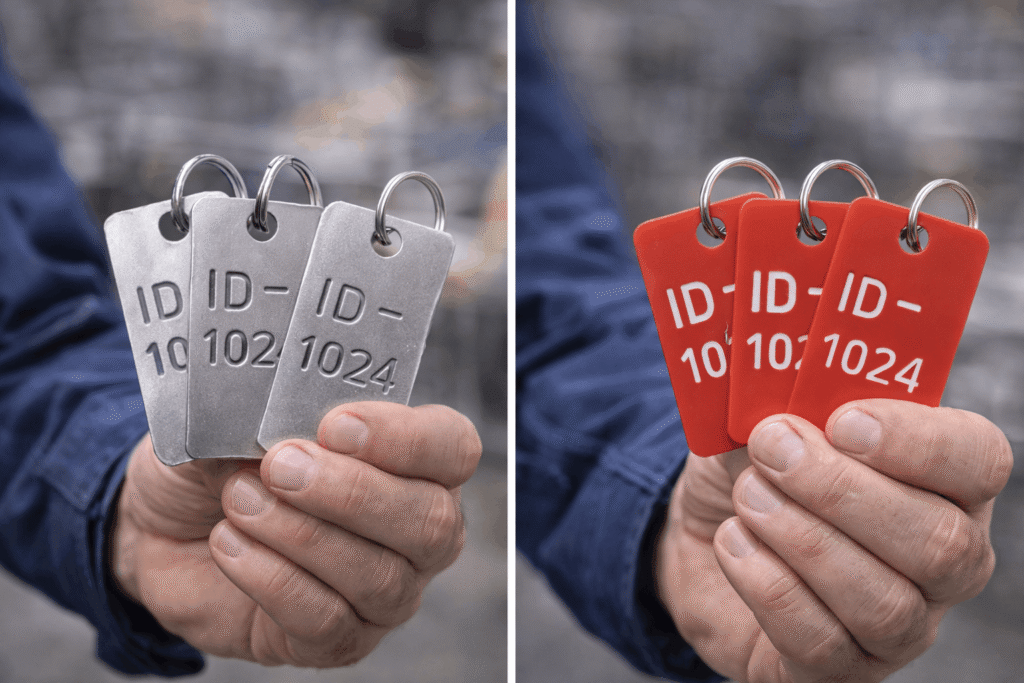

Reliable identification systems support safe and efficient industrial operations. Machinery, infrastructure components, and operational equipment require clear labeling so that maintenance teams, inspectors, and asset managers can track and document assets accurately. Durable identification solutions, such as stamped metal tags, are widely used in industrial environments because they provide permanent markings that remain visible under demanding operating conditions.
Plastic tags are also common in certain labeling applications due to their flexibility and lower production cost. However, industrial environments often expose identification materials to chemicals, moisture, extreme temperatures, and abrasion. These conditions make durability an important factor when selecting a tagging solution, prompting many organizations to compare the long-term performance of metal and plastic tags.
Material Composition and Structural Strength
The primary difference between metal and plastic tags lies in their material composition and structural strength. Metal tags are commonly manufactured from aluminum, stainless steel, or brass—materials known for their durability and resistance to mechanical stress.
Plastic tags, by contrast, are typically produced from PVC, polyester, or other polymer-based materials. These materials offer flexibility and lighter weight but may not provide the same structural resistance as metal. In industrial environments where equipment is subject to vibration, impacts, and temperature fluctuations, metal tags generally maintain their form and integrity more effectively than plastic alternatives.
Performance in Harsh Industrial Conditions
Industrial facilities frequently expose identification materials to oils, solvents, outdoor weather conditions, and mechanical wear. These environmental factors can significantly affect the lifespan of identification tags.
Metal tags demonstrate strong resistance to corrosion, ultraviolet exposure, and high temperatures. Their durability allows them to remain intact even in demanding environments such as manufacturing plants, construction sites, and energy facilities. Plastic tags, however, may fade, crack, or warp when exposed to prolonged sunlight, chemicals, or extreme temperatures. As a result, industrial settings often favor metal identification systems for long-term reliability.
Marking Permanence and Legibility Over Time
The method used to create identification markings also influences how long information remains readable. Metal stamping physically presses characters into the metal surface, creating deep markings that remain legible even after abrasion.
Plastic tags often rely on printed text or surface engraving, which may fade over time due to exposure or repeated cleaning processes. For operations requiring long-term identification, personalized metal tags provide a reliable solution because the information remains permanently embedded within the material.
Compliance and Safety Considerations
Industrial operations often operate under regulatory frameworks that require clear equipment identification. Maintenance schedules, inspection reports, and asset tracking systems rely on labels that remain readable throughout the equipment lifecycle.
Metal tags support compliance by maintaining permanent markings that resist environmental damage. Clear labeling reduces the risk of equipment misidentification and helps maintain accurate records during safety inspections, maintenance procedures, and regulatory audits.
Lifecycle Cost Comparison
Plastic tags often have a lower initial production cost, which makes them appealing for short-term labeling needs. However, replacement frequency can increase lifecycle expenses when plastic tags deteriorate under industrial conditions.
Metal tags offer stronger long-term value due to their durability and resistance to environmental damage. Because metal tags remain legible for extended periods, organizations can reduce replacement costs, improve asset traceability, and maintain consistent identification across large equipment inventories.
When Plastic Tags May Be Suitable
Despite their limitations, plastic tags can still be effective in certain applications. Environments with limited exposure to chemicals, extreme temperatures, or heavy mechanical wear may not require heavy-duty identification materials.
Plastic tags are commonly used for:
- Temporary labeling applications
- Indoor storage identification
- Short-term asset tracking projects
- Lightweight equipment labeling
Selecting the appropriate material depends on the environmental conditions and durability requirements of the specific application.
Choosing the Right Tag for Industrial Durability
Industrial environments require identification systems that remain readable and durable throughout the operational lifecycle of equipment. While plastic tags may serve temporary or low-impact applications, metal tags provide stronger durability, permanent markings, and greater resistance to harsh environmental conditions.
Organizations seeking long-lasting equipment identification solutions often rely on metal tagging systems to support asset tracking, maintenance documentation, and regulatory compliance. Identifab Industries Limited manufactures durable identification products designed for demanding industrial environments. Businesses requiring reliable equipment labeling can contact Identifab Industries Limited to discuss custom stamped metal tags for long-term industrial identification.